
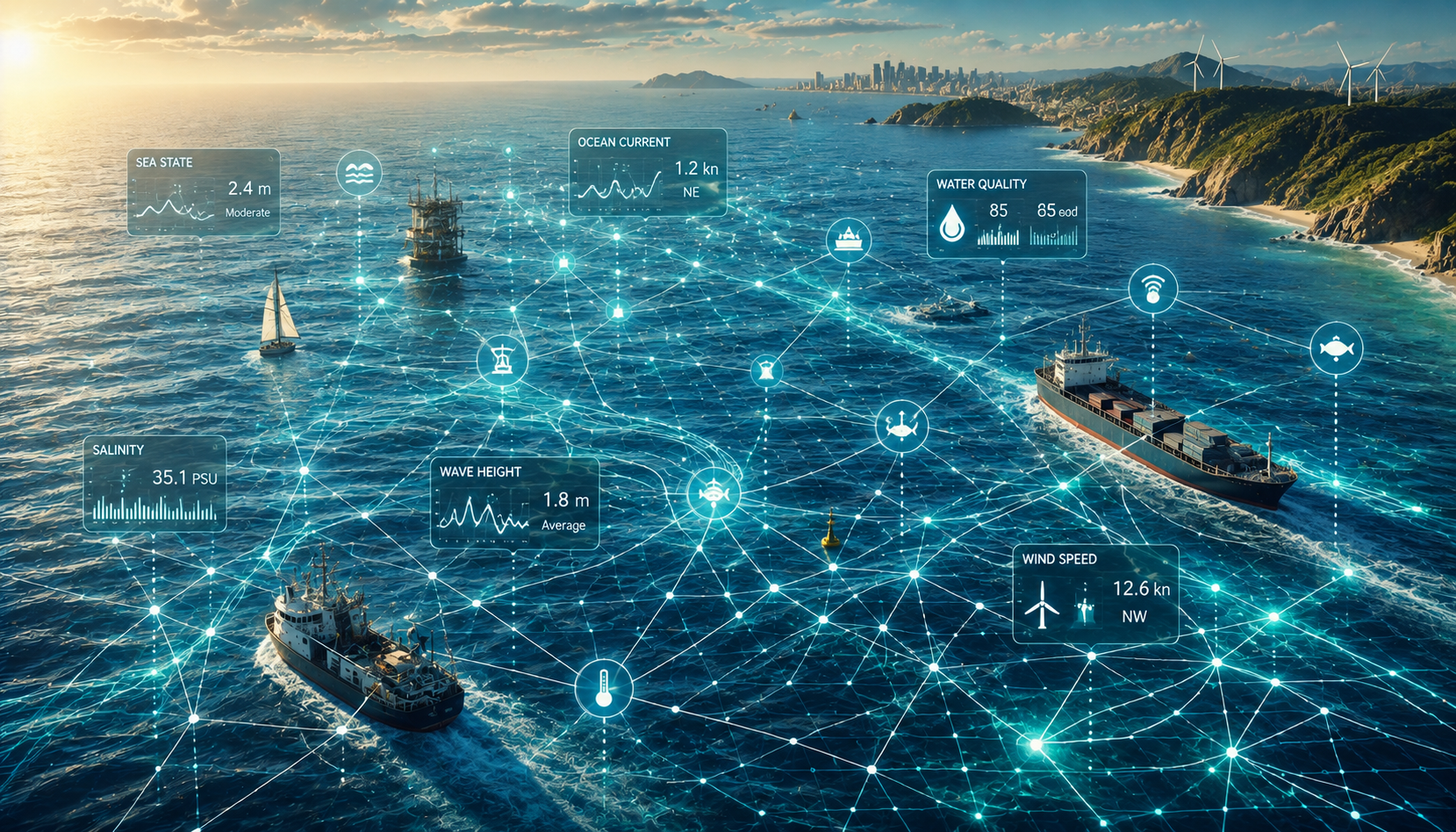
Strengthening regional environmental monitoring through technology and cooperation
Introduction
The Black Sea region holds substantial blue growth potential, offering unique opportunities across a diverse array of blue economy sectors, including sustainable fisheries, maritime transport, coastal tourism, aquaculture, and offshore renewable energy. At the same time, the marine ecosystem faces increasing environmental pressures stemming from climate change, pollution, and anthropogenic stressors, which interact in complex and often poorly understood ways, particularly at the land–sea interface and through riverine inputs. These interlinked challenges, ranging from habitat degradation to water quality deterioration have undertaken the need for integrated and continuous environmental observation to understand ecosystem dynamics and support informed management. Advancing a shared vision for a productive, healthy, resilient, and sustainable Black Sea by 2030 is critical for mitigating the synergistic impacts of natural and human-induced pressures and for unlocking the region's socio-economic and environmental potential.
Despite the shared nature of these challenges, environmental monitoring practices in the Black Sea region have historically been conducted at a national level. Although neighboring countries deployed meticulous monitoring methodologies, differences in technical capacity, measurement standards, and data-sharing mechanisms have limited the development of a coordinated regional response. In addition, the lack of continuous and harmonized data has constrained evidence-based policymaking, and potential forecasting mechanisms.
The BS-SEOS project was initiated under financial support of INTERREG NEXT Black Sea Basin funding mechanism in order to address these challenges by establishing a comprehensive, reliable, and integrated environmental monitoring system for the Black Sea Basin.
What Is BS-SEOS?
BS-SEOS is a regional cooperation aimed at enhancing marine environmental monitoring and data-driven governance in the Black Sea Basin. The project brings together universities research institutions, public authorities, and technical partners from Turkey, Romania, and Georgia to improve the quality, comparability, and accessibility of environmental data. The project is coordinated project by Turkish Employers' Association of Metal Industries (MESS) from Turkey and partnered by İstanbul University Institute of Marine Sciences and Management from Turkey, National Institute for Marine Research and Development "Grigore Antipa" from Romania and the National Environmental Agency from Georgia.
The project adopts an integrated approach that combines field observations, digital infrastructures, and analytical tools within a collaborative monitoring framework. This structure enables systematic data collection, efficient information exchange, and the development of common standards for environmental assessment. Through that, BS-SEOS contributes to strengthening institutional capacity, promoting cross-border collaboration, and supporting sustainable environmental management.
How Does BS-SEOS Work?
BS-SEOS operates through a multi-layered monitoring and data management system that integrates advanced technologies with standardized operational procedures.
Data Collection
Environmental data are collected through autonomous water drones, smart buoy that are equipped with state-of-art underwater sensors. These tools enable continuous and high-resolution monitoring across multiple locations in the coastal area of the Black Sea.
Data Processing and Integration
Data collected from different sources are transmitted, after they are validated, standardized, and integrated into shared databases that established for the project. Automated workflows ensure interoperability and facilitate timely access to information for authorized users.
This digital infrastructure supports near real-time monitoring and long-term trend analysis at both national and regional levels.
Analysis and Decision Support
Analytical models and artificial intelligence-based tools are used to transform raw data into actionable insights. These tools support the identification of environmental risks, anomaly detection, and the development of early warning mechanisms, collaborating with existing real and synthetic databases such as EmodNET and Copernicus. The resulting output contributes to informed wideranged stakeholders from national authorities to fishery communities.
What Do We Monitor?
The BS-SEOS monitoring framework focuses on key indicators that reflect the status of the marine environment. These include water temperature, salinity, dissolved oxygen levels, and pollution-related parameters.
From Data to Action
A central objective of BS-SEOS is to ensure that environmental data are effectively translated into policy-relevant knowledge and operational guidance.
The project aims to reach regional, national and local authorities, regulatory bodies, and research institutions by providing reliable evidence for environmental management, spatial planning, and risk mitigation. Early warning mechanisms that may established with the insights from the project enhance preparedness and response capacities for pollution incidents and extreme environmental events, especially in the Black Sea Basin.
By improving data accessibility and transparency through establishing open-access dashboard and datasets, BS-SEOS also contributes to strengthening accountability and public trust in environmental governance processes.
Regional Cooperation
Environmental challenges in the Black Sea Basin require coordinated responses based on shared objectives and harmonized methodologies. Through joint technical activities, training programmes, and regular coordination mechanisms, the project promotes knowledge exchange and alignment of national practices. These efforts support the development of sustainable institutional networks and long-term partnerships.
Looking Ahead
As environmental pressures in the Black Sea region continue to intensify, the importance of reliable and coordinated monitoring systems is increasing. BS-SEOS provides a solid foundation for advancing digital environmental governance and regional cooperation.
Future activities will focus on expanding monitoring coverage, enhancing analytical capabilities, and strengthening linkages between scientific research and policy processes. The project also aims to support the long-term institutionalization of its monitoring framework within regional governance structures.
Through its integrated and collaborative approach, BS-SEOS contributes to a more resilient, transparent, and sustainable environmental management system for the Black Sea Basin.

